MAR(AI): Bringing AI into autonomous shipping accident investigations
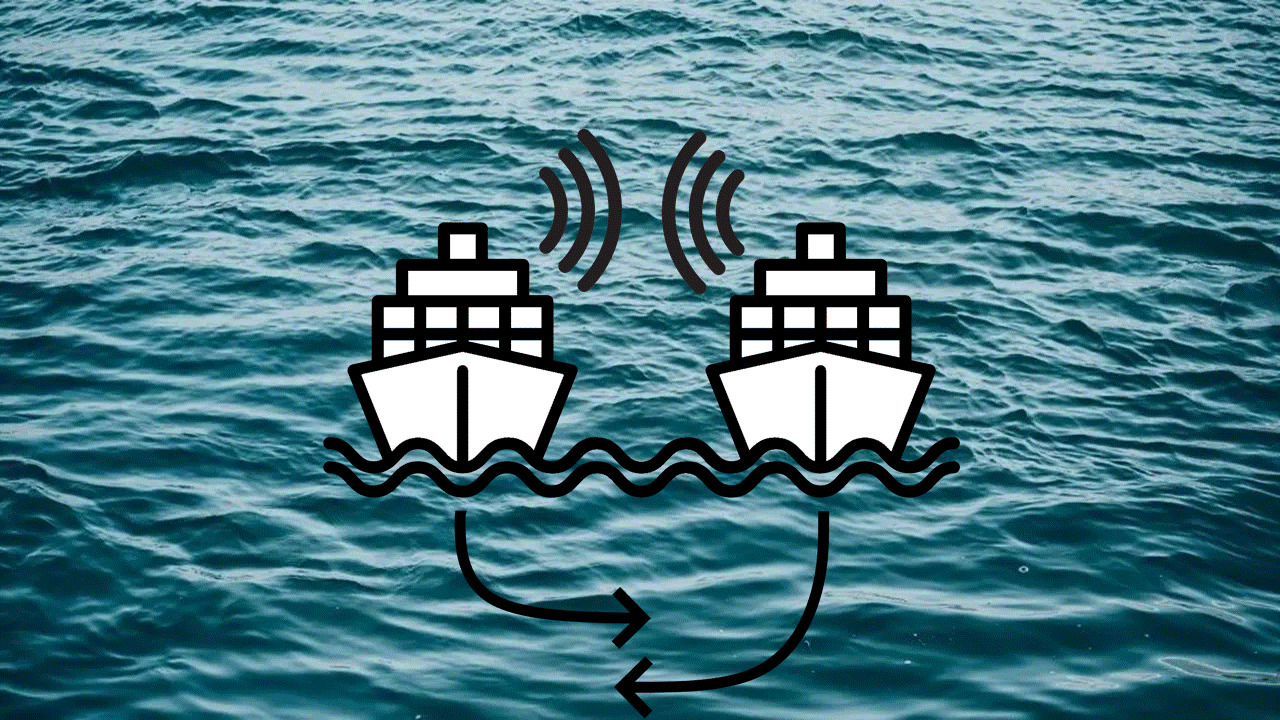
Autonomous vessels are expected to become increasingly common in short-sea shipping and on inland waterways. But what happens when an autonomous vessel is involved in an accident with another vessel? How do accident investigators interpret all the information and data on which the automated system based its decision? Nikos Kougiatsos is working at the Department of Maritime & Transport Technology of TU Delft on MAR(AI), a platform that makes use of artificial intelligence to support maritime accident investigations and help explain what happened.
After finishing his master’s degree in naval architecture and marine engineering in Athens, Greece, Kougiatsos came to TU Delft to embark on a PhD journey within the Department of Marine and Transport Technology. “I was always reading articles about autonomous shipping. I knew I wanted to continue in this field, so when a position opened up at TU Delft, I applied”, says Kougiatsos. In 2024 he completed his PhD, but he stayed on at the university as a postdoctoral researcher. “The MAR(AI) platform I worked on was developed as part of a project funded by the AI Port Center through its Catalyzer 2025 programme.”
Complex and time-consuming task
Although digitalization and automation offer significant opportunities to improve safety in shipping, the systems controlling the autonomous ships are complex. Kougiatsos: “When we started this project, we identified two problems. Firstly, accident investigators did not design the systems they are investigating. It is therefore difficult to interpret the data the system used to make the decision that led to the accident. Secondly, accident investigations involve many different types of data. There are
simulations, reports, regulations, witness statements, images and operational evidence. Bringing all this information together and interpreting it consistently can be a complex and time-consuming task. We found that AI can help organize the information, identify connections and develop evidence-based explanations of what happened, why it happened and what lessons can be learned.”
AI as an assistant
An important principle underlying the MAR(AI) platform is the organization of the available evidence in a structured database. MAR(AI) then uses two different AI techniques. “The first is Retrieval-Augmented Generation, or RAG”, Kougiatsos explains. “This means that instead of using the general knowledge the system was trained on, it bases its answers solely on the information available for a particular investigation. The second one is Prompt Engineering, a technique for giving AI clear instructions to generate more relevant and accurate answers. The platform will then generate an investigation report in PDF format.” Another important part of the platform is its interactive chat function. Investigators and legal experts can effectively ‘talk’ to the accumulated evidence. They can ask what evidence supports a particular conclusion, compare alternative explanations or ask follow-up questions about a specific event. “Of course privacy and control of information were taken into consideration when designing the platform”, the researcher explains. “The information used in these investigations is often sensitive and confidential. MAR(AI) can therefore work with locally deployed, open-weight AI models. This means investigation data does not have to be shared with an external AI service but can remain within the user’s own computing environment.”
What’s next?
“The next step is to further validate the approach together with accident investigators, vessel operators, maritime authorities, classification societies, legal experts and other stakeholders”, says Kougiatsos. “But we believe that its potential goes beyond investigating accidents after they have happened. Similar technology could eventually help remote operators understand why an autonomous vessel makes a particular decision while it is operating. It could also support investigations into incidents involving a single autonomous vessel, such as equipment failure, grounding, cyber incidents or loss of propulsion or steering.”
This touches on an important requirement for the future of autonomous shipping: it is not enough for autonomous systems to operate safely. The people responsible for those systems must also be able to understand and explain why they behave the way they do.