Researcher Hoang Anh Tran publishes scientific work on autonomous shipping on inland waterways
One of the key challenges of autonomous inland shipping, is the safe navigation on busy waterways. Hoang Anh Tran is a researcher within the European AUTOBarge project (Autonomous Barges for Smart Inland Shipping) at the Norwegian University of Science and Technology in Trondheim, working in close collaboration with the Delft University of Technology. As part of an international team of 15 PhD researchers, he has spent the past four years focusing on how autonomous vessels can communicate and cooperate effectively on inland waterways to avoid collisions. His work recently culminated in a scientific publication with the title: Distributed MPC for autonomous ships on inland waterways with collaborative collision avoidance.
“Most collision avoidance systems focus on the open sea and follow a single international set of rules”, Tran explains. “Inland waterways however, are far more complex. Regulations differ between countries. Even small variations in rules can have a significant impact on vessel behavior. A system that ensures safe navigation in one country, does not automatically work in another. That is why it is a challenge to design an algorithm that ensures safe navigation while a ship is navigating through different countries on the same river.”
A two-layer approach
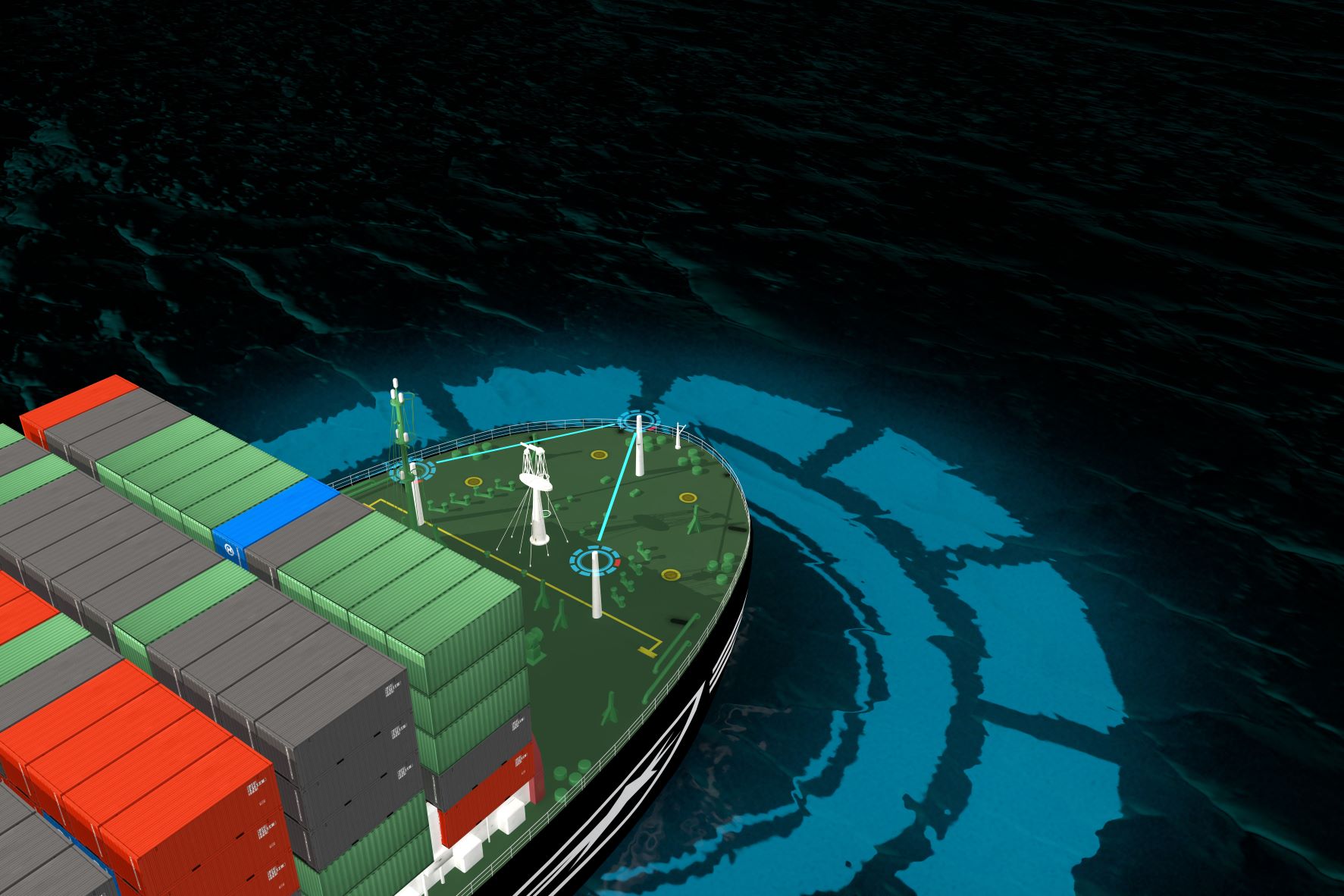
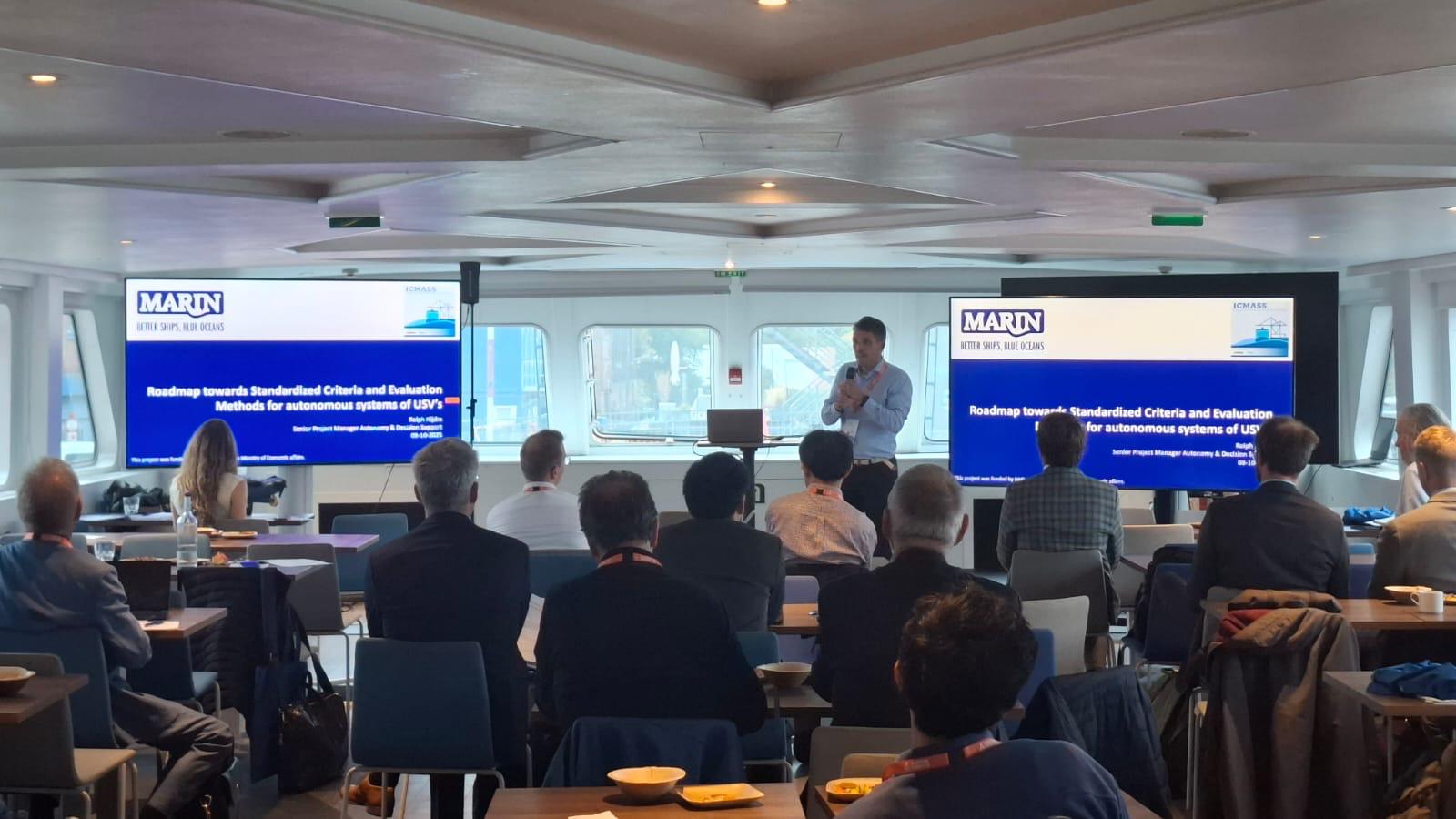
Tran’s research introduces a new, distributed Model Predictive Control (MPC) system for the problem of collision avoidance for autonomous inland waterway ships. At its core is a two-layer framework that separates the task of ensuring traffic rule compliance and avoiding collisions at different layers. The first layer ensures that a vessel complies with local traffic rules, wherever it is. Using GPS, the system can detect when a ship crosses a border and automatically adjust its behavior to the applicable regulations. The second layer focuses on safe interaction between vessels and collision avoidance. In this layer, ships ‘look’ at each other’s vectors and ‘negotiate’ their movements with each other like human captains would do in practice. This negotiation happens through algorithms that predict and coordinate actions. “The two-layer framework allows for modifying traffic rules (based on the region) without reformulating the collision avoidance algorithm so the safe navigation of the autonomous ship is not compromised.” Tran collaborated closely with Delft University in the design of this new MPC based on the two-layer framework. “As you might know, Norway does not have any inland waterways”, states Tran. “So I had to collaborate with a country where there is a lot of traffic on rivers. During a conference in Rotterdam (ICMASS) I learned that the Dutch government is already testing a route exchange protocol for ships on inland waterways. I spent about 3 months in the Netherlands during my research, working closely together with professor Rudy Negenborn.”
From research to reality
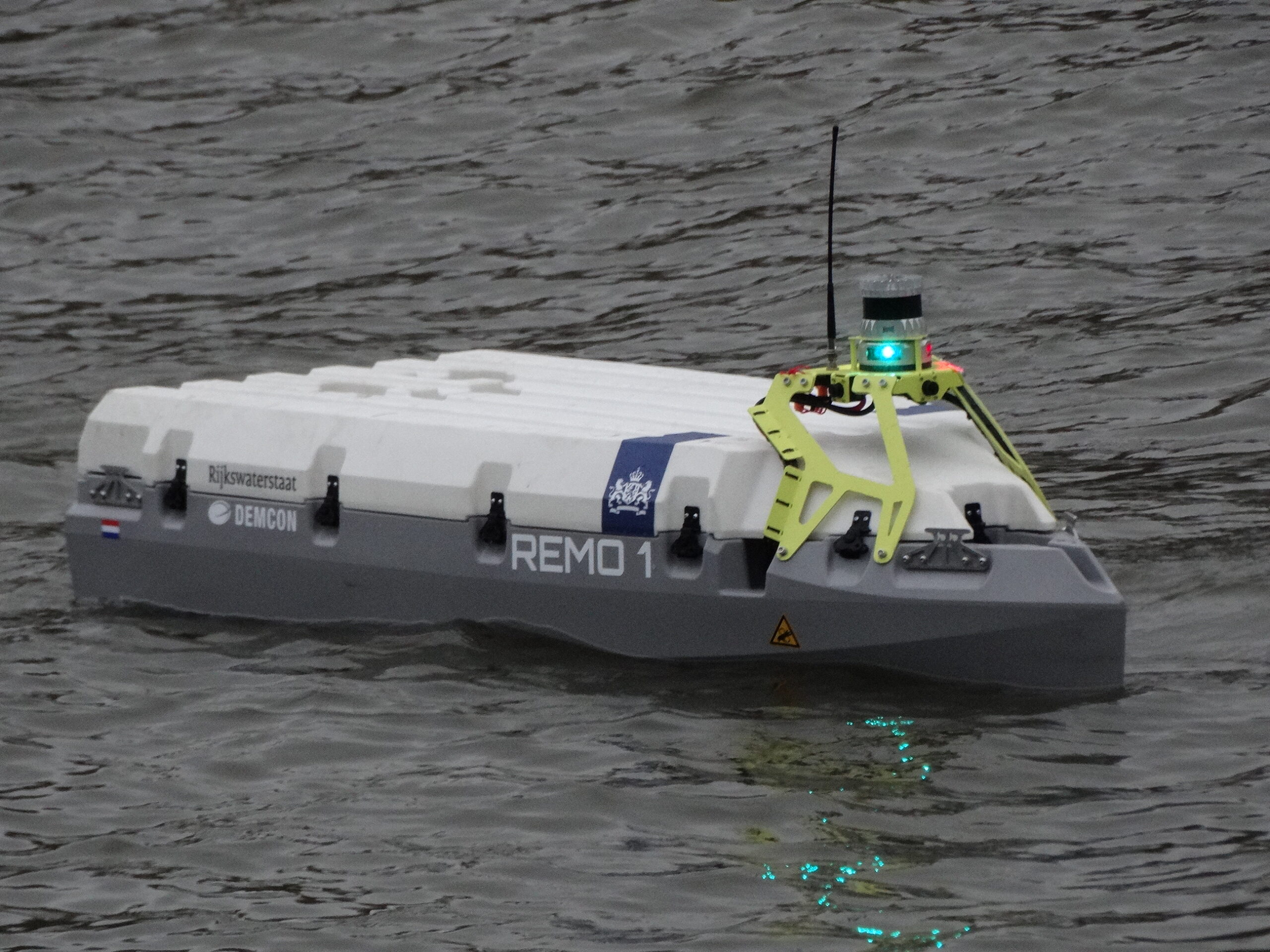
Although the results of the MPC are promising, Tran emphasizes that more work is needed. “Currently we are testing to make sure there are no flaws in the MPC. We already ran tests with three small ships in Norwegian waters, but we need to scale up to more and larger ships in more complex scenarios to optimize the algorithm. We have to make sure the ships react in a ‘normal’ way: not by over- or underreacting. The other challenge we are facing is how to include humans in this scenario. The mix between the human and the machine must be working flawlessly as well.” The researcher continues: “We cannot assume a fully autonomous system yet,” he says. “Human-machine interaction will remain essential.”
Looking ahead
Tran’s research highlights as an important stepping stone towards safer autonomous inland shipping. By enabling vessels to navigate and share busy inland waterways safely, the sector moves closer to a future where autonomy and safety go hand in hand.
For the publication: Distributed MPC for autonomous ships on inland waterways with collaborative collision avoidance – ScienceDirect